Marine VHF radio: fixed, handheld and DSC explained
How to choose a fixed or handheld marine VHF radio, what Channel 16 and DSC do, why an MMSI and position source matter, and where AIS fits.
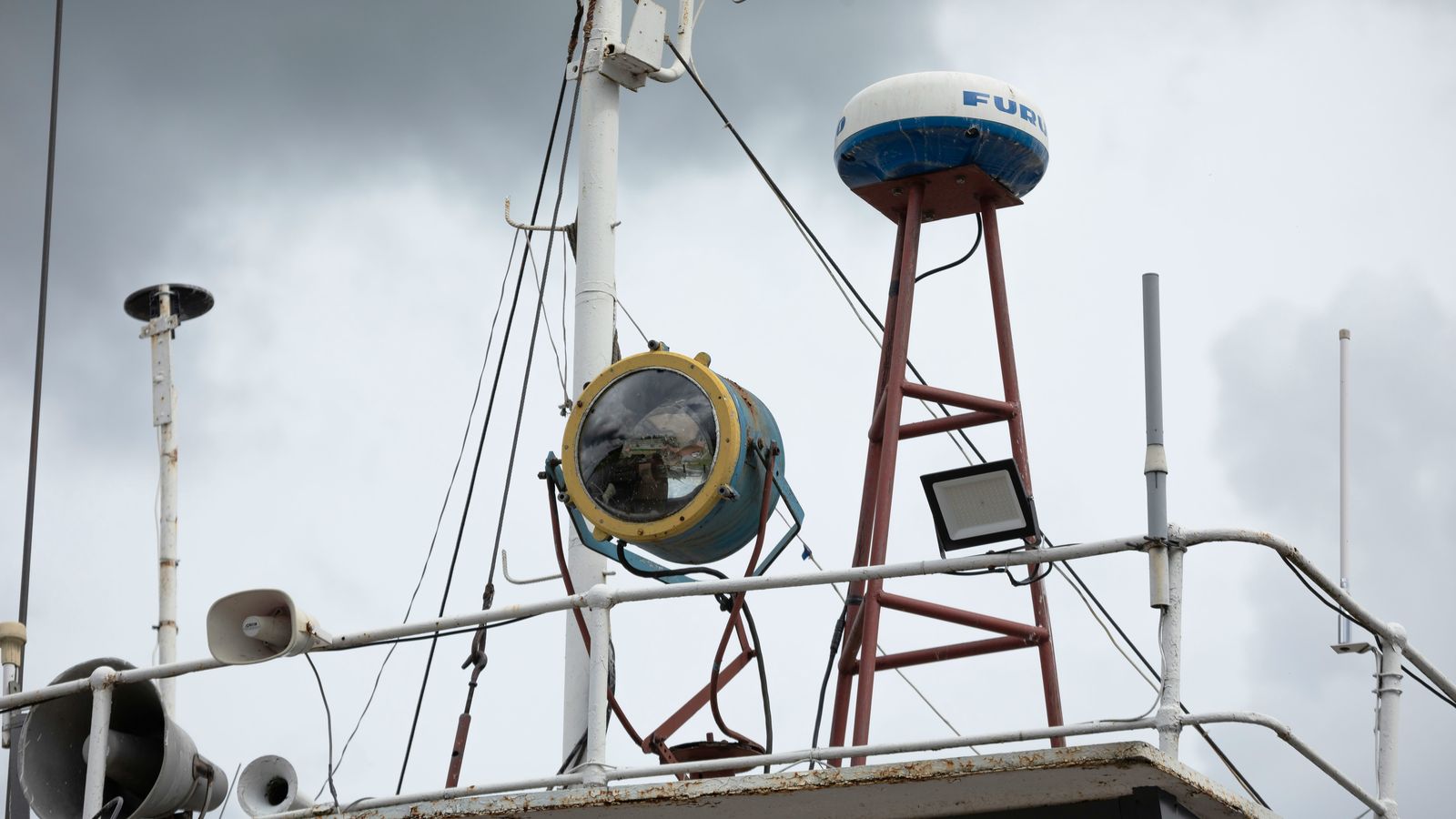
Photo: Belov Sergey / Unsplash ·source · Unsplash License
In one lineStart with the antenna and where the radio will be used; add DSC with a registered MMSI and a reliable position source if you want digital calling.
A marine VHF (very high frequency) radio lets boats and shore stations speak to one another over short radio paths. It is useful for routine calls and for distress communication within range. A radio’s advertised power is only part of the story: its antenna, the height of that antenna and the other station’s antenna shape the path. VHF follows the radio horizon; it does not provide ocean-wide coverage.
If you are buying one, answer three questions first: Where will you use it? Where will its antenna be? Do you need digital selective calling (DSC)? Those choices matter more than a long feature list.
Channel 16, Channel 70 and working channels
Channel 16 is the international VHF voice distress and calling channel. It is where a voice distress call is made and where a brief initial call to another station can begin. Once contact is made for an ordinary conversation, move to an appropriate working channel. Local channel allocations and watch requirements differ, so use the channel plan for the waters you sail.
Channel 70 carries DSC signals, not voice. DSC distress calls explains what the digital alert can send. A DSC distress alert can include the radio’s MMSI identity and its position when the radio has a current Global Navigation Satellite System (GNSS) fix. Other DSC-equipped stations within radio range can receive the alert. That does not replace the voice follow-up on Channel 16 or other distress procedures; the UK small-boat DSC guidance explains the sequence.
A radio with DSC must be programmed with the correct, assigned MMSI. The nine-digit number identifies the station, much as a call address does. Get it through the relevant national authority or its authorised process, check the number before programming, and follow local licensing and operator rules. A receiver’s MMSI decoder can explain a number’s format; it cannot assign or verify registration.
Fixed radio or handheld?
| Choice | Best fit | Main trade-off |
|---|---|---|
| Fixed-mount set | Primary radio on a boat with a suitable antenna, power supply and installation space | Its higher antenna can improve line-of-sight range, but the installation depends on boat power and wiring. |
| Handheld set | Small open craft, cockpit use, tender or an independent backup | Portable and self-contained, but its low antenna position and battery limit its use. |
Many fixed sets can transmit at up to 25 watts (W) and offer a 1 W low-power setting. Handheld sets commonly offer lower maximum power. A 25 W label does not promise a particular number of nautical miles: a low antenna behind a headland may hear less than a lower-power radio with a clear, higher antenna. For the physical range limit and antenna placement, see AIS antennas and splitters. AIS and voice VHF use different channels, but both are line-of-sight radio systems.
A handheld can be a valuable second radio if the fixed installation loses power. Check battery run time, charging, water-resistance rating and whether it floats. If it has DSC, check the rules for its MMSI: a handheld used independently of a particular vessel may need a handheld-specific identity such as the 8MID format, depending on the administration. Do not assume the boat’s MMSI can simply be copied into every portable set.
DSC classes and position input
Class D describes a VHF DSC capability commonly found in fixed recreational sets. Class H is the handheld DSC class defined by ITU-R M.493. These are DSC controller classes, not AIS Class A and Class B. A product listing that says “Class D” tells you about its digital calling functions; it does not tell you whether the set receives AIS.
For DSC, ask whether the radio has built-in GNSS or needs a position feed from another device. If it needs a feed, check the supported connection before buying. NMEA 2000 is a boat network standard that can carry position and other instrument data; NMEA 0183 is an older serial-data standard. A socket labelled NMEA does not prove the intended chartplotter and radio will exchange the right messages. Check both manuals and confirm the radio displays a current position after installation.
Also check that the DSC alert control is accessible at the helm, the MMSI can be programmed for your registration, and the set maintains its required DSC watch while you use voice channels. Learn and practise the radio’s normal calling and test functions from its manual; never use a distress alert to test it.
AIS on a VHF radio: receive is not transmit
Some VHF sets include an AIS receiver. It can decode nearby vessels’ AIS broadcasts and may pass targets to a compatible display. That is useful, but it does not make your own boat appear on another vessel’s AIS display. An AIS transponder is separate transmitting equipment. If you need both a radio and AIS, decide whether a combined receiver/display suits your helm or whether you want a separate transponder and chartplotter.
AIS and DSC may use the same vessel MMSI, but they send different messages on different channels. AIS is an automatic position broadcast. DSC is a digital call or alert. Voice VHF lets people speak. None of the three guarantees that someone else has received, noticed or acted on a message.
A short buying check
- Choose the job. Fixed primary radio, portable backup, or both? A handset on a small boat and a masthead fixed set solve different coverage problems.
- Plan the antenna and power. Include cable, connectors, mounting height and a power supply. If radio and AIS share an antenna, use a suitable active splitter; never connect two transmitters directly to one antenna.
- Check DSC identity and position. Obtain the right MMSI, find out whether GNSS is built in, and verify how the position reaches the set.
- Check the display connection. If you expect AIS targets on a chartplotter, confirm the output protocol and that the radio actually contains an AIS receiver. An “AIS compatible” label can mean only that it can display externally supplied targets.
- Check local rules. Radio licensing, operator qualifications, channels and required equipment depend on flag and area. The manufacturer’s feature list cannot answer those questions.
For named examples, the VHF and DSC section of our gear page shows a fixed Class D set and a floating handheld. The notes there describe published specifications, not hands-on testing. Choose the installation and identity first, then compare hardware.
Common questions
Do I need a fixed or handheld marine VHF radio?
A fixed set with a higher, properly installed antenna is the stronger primary choice when the boat can support it. A waterproof handheld is useful on a small open boat or as an independent backup. Neither has a guaranteed range in nautical miles.
What is the difference between Channel 16 and Channel 70?
Channel 16 carries voice distress, safety and brief calling. Channel 70 is reserved for DSC digital alerts and calls. Never use Channel 70 for voice traffic.
Does a DSC radio need an MMSI and GNSS?
It needs an assigned MMSI to identify itself. A working GNSS position source allows a DSC distress alert to include your current location. Check the display for a current position after installation.
Is a VHF radio with an AIS receiver an AIS transponder?
No. It can hear and display other vessels’ AIS messages, but it does not broadcast your own AIS position. That requires a transponder.
Related equipment
See the hardware in context
These named products perform roles described in this guide. The notes are specification-based, not claims of hands-on testing.
Icom
Fixed mount · GPS + DSC
M330G VHF/DSC radio
A compact fixed VHF with an external GPS antenna and Class D DSC capability.
Check price & availability for Icom M330G fixed-mount VHF/DSC radio on AmazonUniden
Handheld · floating · IPX8
Atlantis 275 handheld VHF
A 6 W floating handheld with weather alerts and US, Canadian and international marine channels.
Check price & availability for Uniden Atlantis 275 floating handheld VHF on AmazonShakespeare
8 ft · 6 dB gain
5101 VHF antenna
A widely used eight-foot fibreglass marine VHF antenna for powerboat installations.
Check price & availability for Shakespeare 5101 eight-foot VHF antenna on Amazon
As an Amazon Associate, MarineActivity earns from qualifying purchases. Amazon is the seller; we do not set prices, hold stock or fulfil orders. Prices and availability can change.
See all field notes and equipmentSources
Check these yourself. Where this page paraphrases a standard, the standard is what governs — not our wording.
- US Coast Guard Navigation Center — radio information for boaters and Channel 70
- US Coast Guard Navigation Center — digital selective calling classes
- ITU-R M.493-16 — digital selective calling equipment classes
- UK Maritime and Coastguard Agency — VHF DSC procedures for small boat users
- US Coast Guard Navigation Center — MMSIs for VHF handhelds