AIS antennas and splitters: height, cable and sharing a VHF antenna
Why antenna height sets AIS range more than transmit power, when one VHF antenna can serve both radio and AIS, what an active splitter does, and how much range cheap coax quietly throws away.
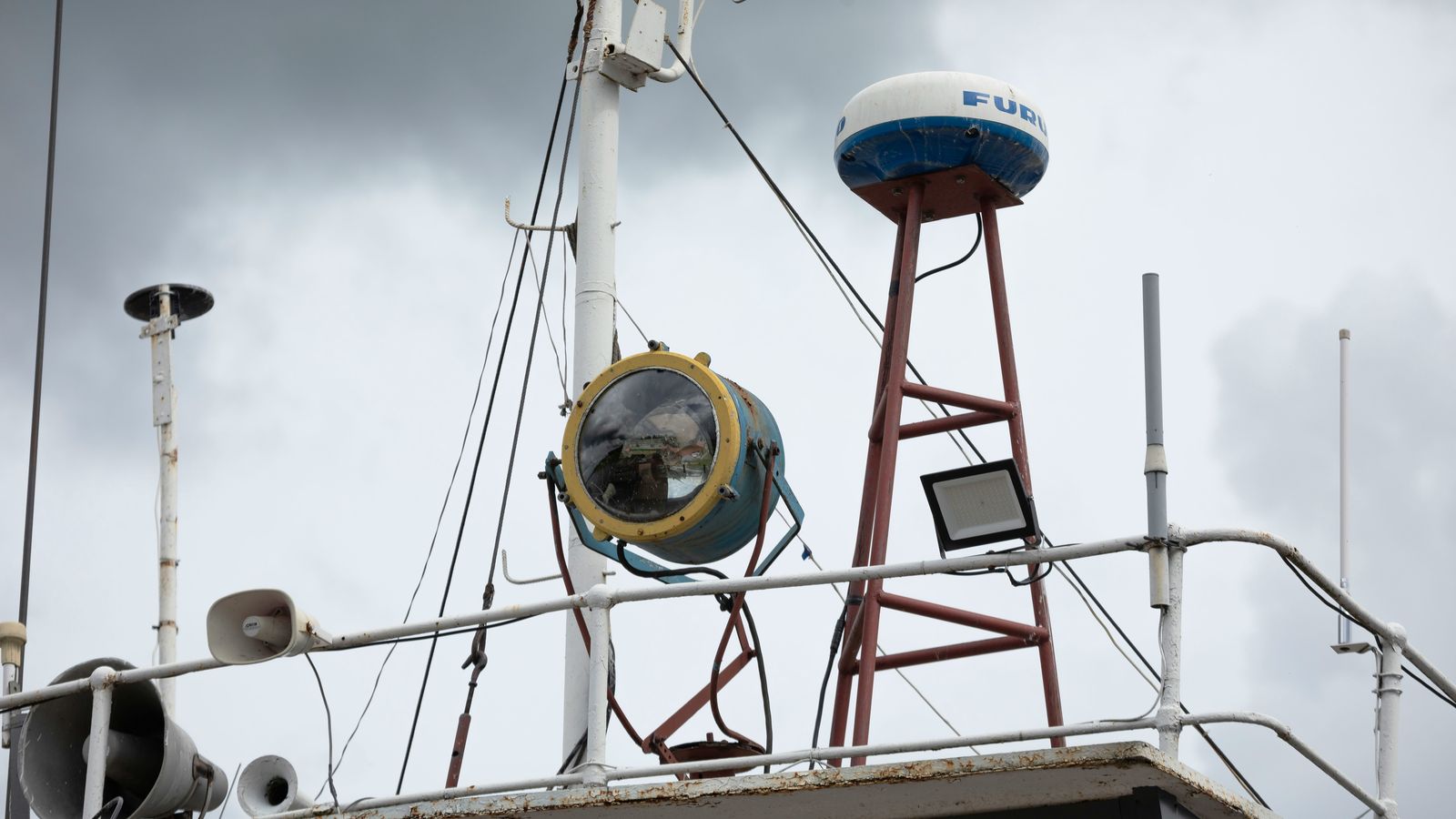
Photo: Belov Sergey / Unsplash ·source · Unsplash License
In one linePut the antenna as high as practical, feed it with low-loss cable, and never share it between a radio and a transponder without an active splitter.
AIS is VHF radio, and VHF travels in something close to a straight line. The earth curves away underneath it. That single fact decides more about how far your AIS reaches — in both directions — than the box you buy. This guide covers the half of the installation that sales listings rarely mention: the antenna, the cable and how the two share a mast with your radio.
If you have not chosen the AIS unit itself yet, start with AIS transponders explained.
Height beats power
The usable range between two VHF antennas is set by the radio horizon. A standard approximation, with antenna heights in metres and the answer in nautical miles, is:
d ≈ 2.23 × (√h₁ + √h₂)
It assumes normal atmospheric refraction and open water. Here is what it gives for some typical pairs:
| Your antenna | Other antenna | Line-of-sight range |
|---|---|---|
| 3 m (powerboat arch) | 3 m (another small boat) | about 8 NM |
| 3 m | 20 m (ship’s mast) | about 14 NM |
| 3 m | 100 m (shore receiver on a hill) | about 26 NM |
| 15 m (sailing masthead) | 3 m | about 12 NM |
| 15 m | 20 m | about 19 NM |
| 15 m | 100 m | about 31 NM |
These are geometry, not guarantees. A 2 W Class B/CS signal fed through a long run of thin cable may fade out well before the horizon, while unusual atmospheric conditions can occasionally carry VHF much further. But the shape of the table holds: raising either antenna buys more range than another few watts ever will. It is also why the shore receivers that feed this site’s coverage are so uneven — a station on a hilltop hears much further out to sea than one at the quayside.
One antenna or two
A transponder needs a VHF antenna, and so does your radio. You have two clean options.
A dedicated AIS antenna. Simplest electrically and gives each system its own path. The cost is a second antenna and cable, and the separation problem below. Any marine VHF antenna works: the AIS channels sit near the top of the marine VHF band, which standard antennas cover.
A shared antenna with an active splitter. One antenna, usually the highest one on the boat, serves both. The splitter listens for the radio keying up, switches the antenna to the radio while it transmits, and hands it back to AIS when it stops. Between radio transmissions both receive at the same time.
What you must not do is join the two with a passive T-piece or a coax “Y”. Whichever set transmits would put its power straight into the other’s receiver.
A splitter is not free. It adds a small loss in each path, needs power to work, and while the radio transmits your AIS is briefly deaf and silent. Check what the splitter does when it loses its own power supply: the safe design keeps the radio connected to the antenna, even if AIS drops out.
Antenna separation
If you fit two VHF antennas, keep them apart. Two antennas close together couple strongly: the radio’s transmission can desensitise or, at worst, damage the AIS receiver, and vice versa. Vertical separation isolates far better than horizontal — one antenna directly above the other, rather than side by side on a rail. Follow the separation figures in your transponder’s installation manual; they are set for that unit’s receiver.
The transponder’s GNSS antenna is a separate item. It needs a clear view of the sky, away from the shadow of radar scanners and the field of VHF whips.
Cable loss: the range you never see
Coaxial cable turns some of the signal into heat, and it does it in both directions — your transmissions arrive weaker, and so do everyone else’s. Loss is quoted in decibels per length at a given frequency. Every 3 dB halves the power.
As a rough guide at marine VHF frequencies, thin RG-58 loses several decibels per 30 metres, RG-8X less, and heavier RG-213 or low-loss foam cables much less again. Check the manufacturer’s data sheet at 150 to 160 MHz for the cable you are buying. On a sailing boat with a masthead antenna, a 20 m cable run in thin coax can throw away more than half the power before the signal leaves the mast — undoing much of the height advantage that put the antenna up there.
Connectors matter too. A corroded or badly crimped PL-259 at the base of the mast is one of the most common causes of “my AIS range is poor”.
Gain and the sailing boat problem
Antenna gain is not extra power. A higher-gain vertical antenna squeezes its radiation into a flatter disc, sending more energy toward the horizon and less upward. On a powerboat that sits level, that helps. On a sailing boat heeled at 20 degrees, a flat disc points into the sky on one side and the sea on the other.
The usual compromise:
- Sail: a short 3 dB whip at the masthead, where height does the work.
- Power: a 6 dB antenna of around 2.4 m (8 ft) on the arch or hardtop, where height is limited and the boat stays level.
- Either: the highest mounting point you can reach without creating a structural problem.
Receiving stations ashore
The same rules apply to the receivers that feed AIS tracking sites. A community receiver on a balcony a few metres above sea level hears a few miles of harbour. One on a hilltop hears a whole approach. Most of the positions on our live map come from shore stations like these, which is why every position on the site names the feed it came from and how old it is. Where no receiver is high enough or close enough, the map is empty — and that is the correct answer.
Testing an installation
- Receive first. If the unit decodes nearby traffic at a reasonable distance, the antenna, cable and connectors are working.
- Compare with a known source. Note the range at which you first hear a large ship, then check it against the horizon table above. Far short of the geometric figure suggests cable or connector loss.
- Transmit check. Ask a nearby boat or a marina with AIS to confirm they see you, with the right name and size.
- Recheck after rig work. Masts come down, connectors get disturbed, splitter power gets disconnected.
None of this turns AIS into a collision-avoidance guarantee. It is one input alongside radar, a lookout and the collision regulations.
Related equipment
See the hardware in context
These named products perform roles described in this guide. The notes are specification-based, not claims of hands-on testing.
Shakespeare
8 ft · 6 dB gain
5101 VHF antenna
A widely used eight-foot fibreglass marine VHF antenna for powerboat installations.
Check price & availability for Shakespeare 5101 eight-foot VHF antenna on Amazonem-trak
Transmit + receive · 5 W SOTDMA
B951 AIS transceiver
A compact Class B unit with 5 W SOTDMA, internal GPS, NMEA 0183 and NMEA 2000.
Check price & availability for em-trak B951 Class B AIS transceiver on AmazonYacht Devices
NMEA 2000 · Wi-Fi
YDWG-02 Wi-Fi gateway
A compact gateway that makes NMEA 2000 data available to compatible computers, tablets and phones.
Check price & availability for Yacht Devices YDWG-02 NMEA 2000 Wi-Fi gateway on Amazon
As an Amazon Associate, MarineActivity earns from qualifying purchases. Amazon is the seller; we do not set prices, hold stock or fulfil orders. Prices and availability can change.
See all field notes and equipmentSources
Check these yourself. Where this page paraphrases a standard, the standard is what governs — not our wording.