AIS ship type codes explained
The AIS ship-and-cargo type is a two-digit code with a decade structure and a cargo qualifier digit. Learn to read it and the categories on any vessel map stop being arbitrary.
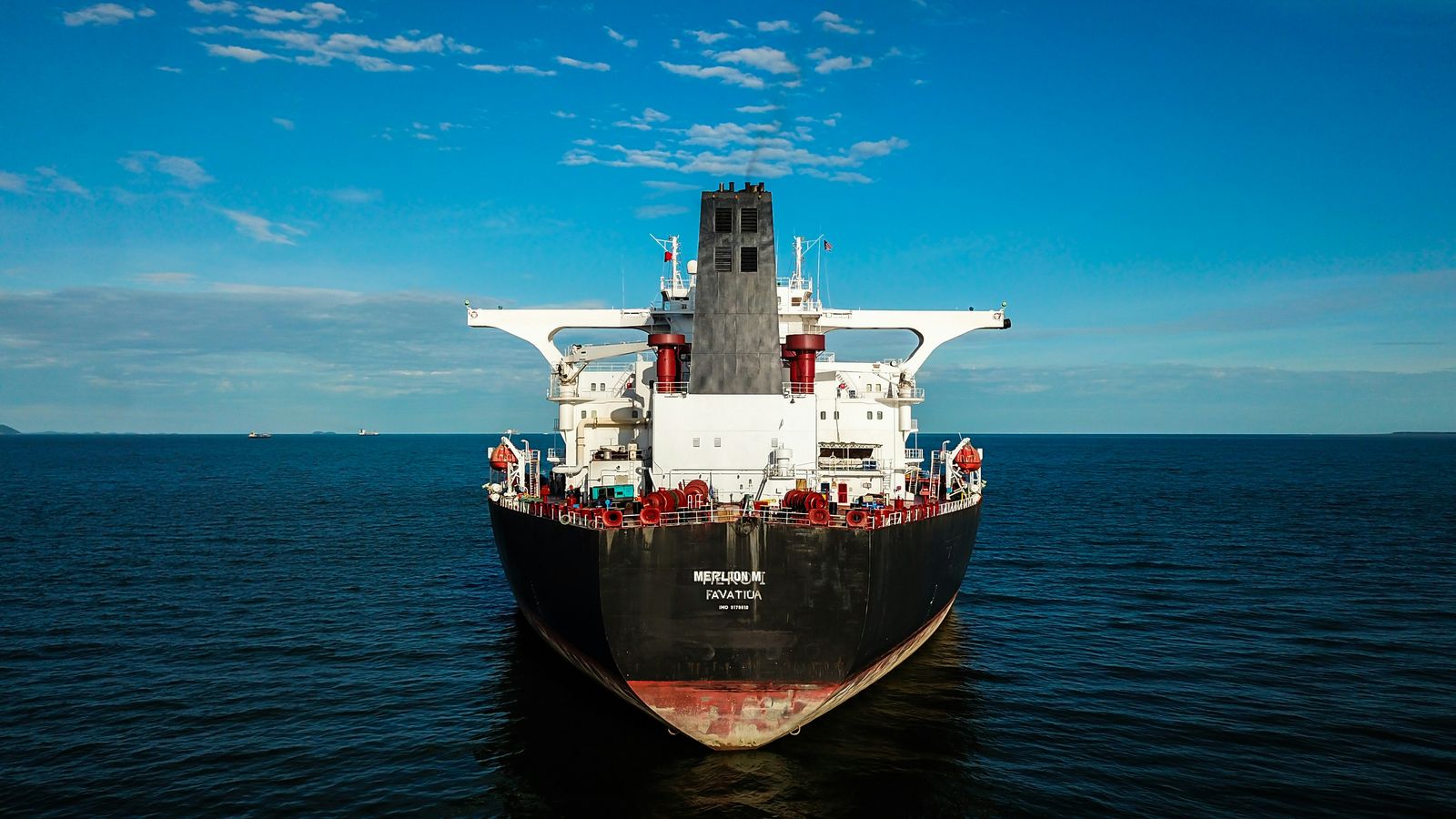
Photo: Fredrick F. / Unsplash ·source · Unsplash License
In one lineThe first digit of an AIS ship type is the family; for most families the second digit says whether the ship is carrying dangerous goods.
The AIS “ship and cargo type” field is a single number from 0 to 99, sent in the static report. It carries two pieces of information stacked into two digits, and once you can read it, the coloured dots on a vessel map stop being a legend you have to memorise.
The decade structure
The tens digit sets the family:
| Range | Family |
|---|---|
| 20–29 | Wing-in-ground (WIG) craft |
| 30–39 | Special activities — one code per activity, no cargo qualifier |
| 40–49 | High-speed craft (HSC) |
| 50–59 | Special craft — one code per role, no cargo qualifier |
| 60–69 | Passenger ships |
| 70–79 | Cargo ships |
| 80–89 | Tankers |
| 90–99 | Other type |
Two of those ranges, the 30s and the 50s, break the pattern deliberately. Instead of a family plus a qualifier, each code in those ranges is its own distinct meaning.
The 30s — what the ship is doing:
| Code | Meaning |
|---|---|
| 30 | Fishing |
| 31 | Towing |
| 32 | Towing, tow exceeding 200 m in length or 25 m in breadth |
| 33 | Dredging or underwater operations |
| 34 | Diving operations |
| 35 | Military operations |
| 36 | Sailing |
| 37 | Pleasure craft |
| 38, 39 | Reserved |
The 50s — what the ship is for:
| Code | Meaning |
|---|---|
| 50 | Pilot vessel |
| 51 | Search and rescue vessel |
| 52 | Tug |
| 53 | Port tender |
| 54 | Vessel with anti-pollution equipment |
| 55 | Law enforcement |
| 56, 57 | Spare, for local assignment |
| 58 | Medical transport |
| 59 | Non-combatant ship, per Resolution No. 18 of the Radio Regulations |
The cargo qualifier
For the ranges that do follow the pattern — 20s, 40s, 60s, 70s, 80s and 90s — the units digit says something about the cargo, using the IMO dangerous-goods categories:
| Units digit | Meaning |
|---|---|
| 0 | All ships of this type |
| 1 | Carrying dangerous goods, category A |
| 2 | Carrying dangerous goods, category B |
| 3 | Carrying dangerous goods, category C |
| 4 | Carrying dangerous goods, category D |
| 5–8 | Reserved for future use |
| 9 | No additional information |
So 70 is a cargo ship, plain. 71 is a cargo ship declaring category A dangerous goods. 80 is a tanker; 82 is a tanker declaring category B. 60 is a passenger ship, 69 a passenger ship with no additional information given.
The categories A through D come from the IMDG framework and relate to the hazard of the cargo carried in bulk, with A the most severe. In practice the qualifier is used sparsely — many operators set the family code and leave the units digit at 0 or 9 — so its absence tells you very little, while its presence is a genuine declaration.
What the code is not
It is not verified. The ship-and-cargo type is typed into the transponder at commissioning and updated by hand thereafter. There is no authority checking it against the ship’s certificates.
It is not the ship’s class or design. A code of 70 covers a 200,000-tonne bulk carrier and a 1,000-tonne coaster equally. AIS does not distinguish container ship from bulker from general cargo — that is a common misconception, and any site claiming to show you “all container ships” from AIS alone is inferring it from elsewhere.
Zero means unset. A ship-and-cargo type of 0 is “not available”, not a valid category. Our decoder returns “Unknown” for it and for anything outside 1–99, and vessel pages say so rather than guessing.
How we group them
The site collapses the 99 codes into a dozen readable categories for map colours, filters and ship-type pages. The mapping is deliberate and documented:
| Our category | Codes |
|---|---|
| Cargo | 70–79 |
| Tanker | 80–89 |
| Passenger | 60–69 |
| Fishing | 30 |
| Tug & tow | 31, 32, 52 |
| Pleasure craft | 37 |
| Sailing | 36 |
| High-speed craft | 20–29, 40–49 |
| Service | 33, 34, 50–58 |
| Military | 35, 55, 59 |
| Other | 90–99 |
| Unknown | 0, and anything undefined |
A few codes appear in two of our groupings by intent — 55, law enforcement, reads as both service and military depending on what a reader is looking for, and we resolve it to military. Every ship-type page states which raw codes it contains, so you can always get back to the underlying number.
Reading a type code in the wild
Given 82 on a vessel page:
- Tens digit 8 → tanker.
- Units digit 2 → declaring category B dangerous goods.
- Therefore: a tanker whose operator has declared a category B hazardous cargo.
Given 32:
- In the 30s, so it is an activity code, not a family plus qualifier.
- 32 → towing with a tow over 200 m long or 25 m wide.
- Therefore: this vessel is warning you that its tow is very large. That is a navigational warning encoded in a ship type, and it is the sort of thing AIS does well.
Sources
Check these yourself. Where this page paraphrases a standard, the standard is what governs — not our wording.