

AIS Class A vs Class B: reporting rates and which boat needs which
Compare Class A, Class B/SO and Class B/CS AIS transmitters by power, reporting interval, radio access and transmitted fields. See which rules and boat uses matter before choosing.
Photo: Michael_Kastelic / Pixabay ·source · Pixabay License
In one lineClass A is the required ship fit under SOLAS; most recreational boats that choose to transmit use Class B, with SO reporting more often at speed than CS.
Class A and Class B AIS transmitters both broadcast a vessel’s identity and position over VHF. Other vessels with AIS can receive either class. The difference is in how each unit gets radio airtime, how often it sends a position, and which extra fields it can send. A receive-only AIS set sends nothing about your boat; the transponders guide starts with that distinction.
The differences at a glance
| Class A | Class B/SO | Class B/CS | |
|---|---|---|---|
| Transmit power | 12.5 W | 5 W | 2 W |
| Radio access | SOTDMA: reserves slots | SOTDMA: reserves slots | CSTDMA: checks for a free slot |
| Nominal position report at 2–14 knots | Every 10 s | Every 30 s | Every 30 s |
| Nominal report at 14–23 knots | Every 6 s; every 2 s while changing course | Every 15 s; every 5 s while changing course | Every 30 s |
| Nominal report above 23 knots | Every 2 s | Every 5 s | Every 30 s |
| Slow or stationary | Every 3 min when anchored or moored at no more than 3 knots | Every 3 min at no more than 2 knots | Every 3 min at no more than 2 knots |
| Navigational status, destination and ETA | Sent | Not sent | Not sent |
| Usual use | Ships subject to SOLAS carriage rules | Faster leisure and smaller commercial boats | Leisure and smaller commercial boats |
These are nominal transmission intervals, not a promise that a shore station or another boat receives every report. Class A also speeds up to about 3⅓ seconds at 0–14 knots while changing course. An assigned schedule, congested channels and reception conditions can alter what a display shows. The AIS radio guide explains the two channels and their time slots.
Why SOTDMA and CSTDMA matter
SOTDMA means self-organising time-division multiple access. A Class A or Class B/SO unit listens to nearby traffic, reserves a future transmission slot and tells others which slot it will use. CSTDMA means carrier-sense time-division multiple access. A Class B/CS unit listens for a free slot shortly before sending; when the channel is busy it can defer its report.
That distinction matters most near busy ports. A Class B/CS target may be updated less regularly than its nominal 30-second rate suggests. Even a reserved slot cannot overcome a poor antenna, distance or a receiver that is not listening. Power matters, but antenna height and the VHF radio horizon often matter more; see AIS antennas and splitters.
Which class does a boat need?
Start with the carriage rule that applies to the vessel, its flag and its voyage. SOLAS Chapter V, Regulation 19 requires AIS on ships of 300 gross tonnage and above on international voyages, cargo ships of 500 gross tonnage and above on other voyages, and passenger ships regardless of size. Those ships normally use Class A. National and local rules can add requirements, including for some fishing, towing and passenger vessels. Check the applicable authority’s rule before selecting a unit for commercial work.
For a recreational boat that is free to choose, Class B is the usual transmitter. At ordinary cruising speeds of 2–14 knots, SO and CS have the same nominal 30-second position interval. SO offers 5 W transmission and reserved slots, and reports faster at higher speeds or while turning. CS offers 2 W and a simpler channel-access method. Neither class replaces a lookout, radar or the other equipment your voyage requires.
If you only want to see nearby AIS traffic, a receiver may suffice, but it does not make your boat visible to anyone else. If you decide to transmit, you also need an assigned MMSI, a suitable antenna, power and a way to check the installation. The transponders guide covers those installation choices.
What the class looks like on a vessel page
Class A position messages 1, 2 and 3 can contain navigational status. Its separate static and voyage message 5 contains name, type, dimensions, draught, destination and ETA. Class B usually sends position in message 18 and static details in the two parts of message 24. It cannot send navigational status, draught, destination or ETA in those reports. So “Not reported” beside those fields on a vessel page may be exactly what Class B transmitted, not a missing entry we should fill in.
Static details are sent around every six minutes, much less often than positions. A vessel can appear by MMSI with a recent position before its name arrives. Our pages show the received age and source feed beside a position. They do not label a vessel’s AIS class directly, and an empty status or destination alone does not prove its class: a report can also be missing. All positions here depend on shore receivers with uneven coverage; a boat leaving their VHF range can disappear from this site while it continues transmitting. How AIS works explains that gap.
Comparing equipment
The gear page puts the existing AIS transceiver and related antenna and display equipment in context. Its em-trak B951 is an example of a Class B/SO unit, not a Class A substitute. Check the exact listing and your applicable carriage rule before buying. The related equipment below uses the site’s existing product links and includes the affiliate disclosure.
Frequently asked questions
Is Class B AIS enough for a recreational boat?
In most places recreational boats are not required to carry AIS. If you choose to transmit, Class B is the usual fit. Check your flag state and the waters you use before buying: commercial service or local rules can change the requirement.
Does Class B/SO transmit more often than Class B/CS?
At 2–14 knots both nominally report every 30 seconds. Above 14 knots, Class B/SO normally reports every 15 seconds, or every 5 seconds above 23 knots and when changing course at 14–23 knots. Class B/CS normally reports every 30 seconds above 2 knots. Congestion or an assigned schedule can change the interval actually heard.
Can a Class B boat send its destination or navigational status?
No. Class B position message 18 has no navigational-status field, and its static message 24 does not carry destination or ETA. A vessel page showing those fields as “Not reported” is normal for Class B equipment.
Does a Class A or Class B transmitter guarantee a boat appears here?
No. This site receives positions from shore-based, terrestrial AIS feeds. A vessel must be within range of a contributing receiver and included in its feed. A missing or old position is not proof that the boat stopped transmitting.
Related equipment
See the hardware in context
These named products perform roles described in this guide. The notes are specification-based, not claims of hands-on testing.
em-trak
Transmit + receive · 5 W SOTDMA
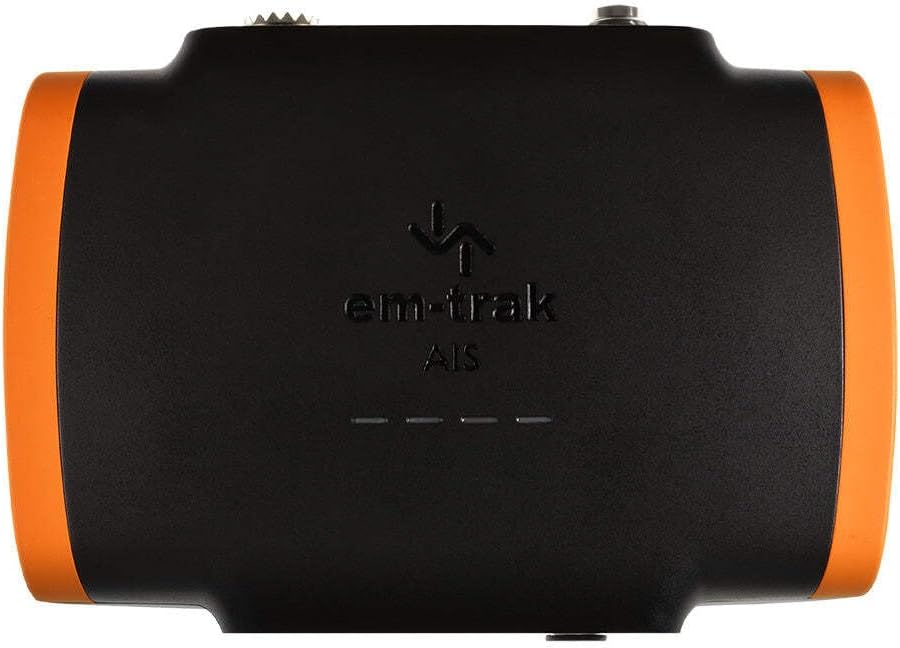
B951 AIS transceiver
A compact Class B unit with 5 W SOTDMA, internal GPS, NMEA 0183 and NMEA 2000.
Check price & availability for em-trak B951 Class B AIS transceiver on AmazonShakespeare
8 ft · 6 dB gain

5101 VHF antenna
A widely used eight-foot fibreglass marine VHF antenna for powerboat installations.
Check price & availability for Shakespeare 5101 eight-foot VHF antenna on AmazonMaretron
NMEA 2000 · USB
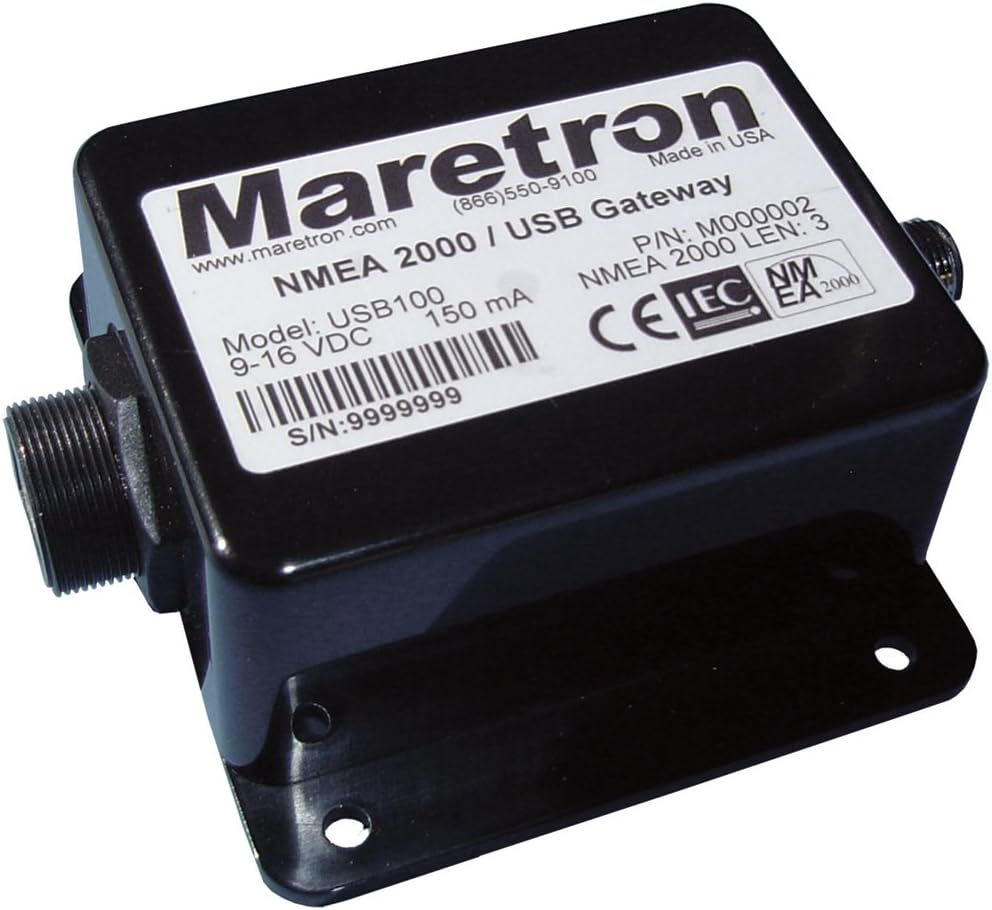
Maretron USB100 gateway
A USB gateway for reading NMEA 2000 network data on a computer.
Check price & availability for Maretron USB100 NMEA 2000 USB gateway on Amazon
As an Amazon Associate, MarineActivity earns from qualifying purchases. Amazon is the seller; we do not set prices, hold stock or fulfil orders. Prices and availability can change.
See all field notes and equipmentSources
Check these yourself. Where this page paraphrases a standard, the standard is what governs — not our wording.